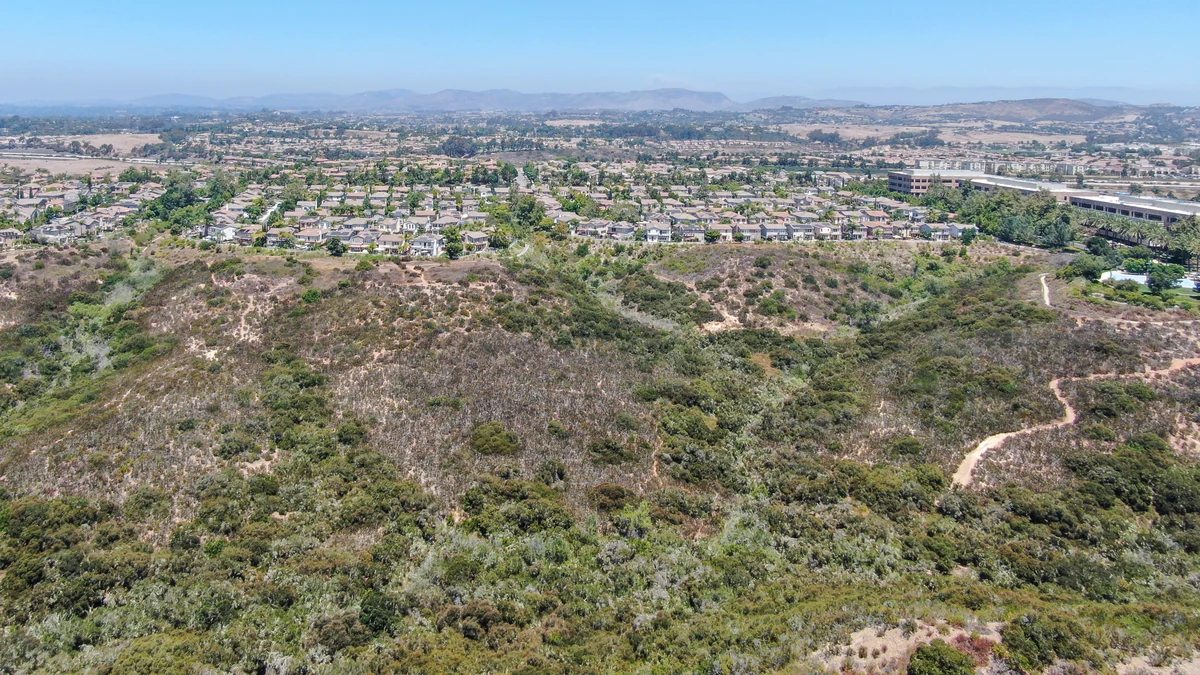
A fire-hazard-zone label should change the sequence of a San Diego home purchase, but it does not answer the transaction by itself. Before a buyer removes inspection, loan, or insurance protections, the buyer should establish which official map governs the parcel, review the natural-hazard and fire-related disclosures, obtain property-specific insurance terms for the intended occupancy, confirm the lender’s requirements, and estimate any material mitigation work.
The map, the physical property, the insurance market, and the loan file are separate sources of information. A mapped zone does not establish a premium or guarantee that coverage will be available. A property outside a mapped zone is not automatically insurable on preferred terms. The following 2026 checklist is intended to organize an address-specific review before a buyer makes a contingency decision.
1. Confirm the parcel and the responsible jurisdiction
Begin with the assessor’s parcel number and legal address. “San Diego” may refer to the City of San Diego, another incorporated city, or an unincorporated area. The mailing city and ZIP code do not reliably identify the government or fire authority responsible for a particular parcel.
The California Office of the State Fire Marshal maintains the official Fire Hazard Severity Zone information and viewer for State Responsibility Areas and its recommendations for Local Responsibility Areas. The Office directs users in a Local Responsibility Area to confirm a specific property with the local jurisdiction. The City of San Diego Fire-Rescue Department provides the City’s map and related information. The San Diego County Fire Marshal provides direction for property within its district and notes that classifications may have changed under the updated mapping.
Save the official result, map date, responsibility area, jurisdiction, and the date of the search. Do not rely only on a listing description, a generalized neighborhood map, an insurance score, or a screenshot without a parcel reference. If the address lies close to a boundary or the mapping is unclear, obtain written clarification from the responsible agency or a current natural-hazard disclosure report prepared for the transaction.
2. Read a fire-hazard map as a hazard classification, not an insurance decision
The Office of the State Fire Marshal distinguishes hazard from risk. Its Fire Hazard Severity Zone methodology evaluates physical conditions associated with the likelihood and expected behavior of fire over a long period. The hazard classification does not account for every property-level mitigation measure, such as recent fuel reduction or home-hardening work.
Insurance underwriting is a separate process. An insurer may evaluate the structure, roof, vents, access, surrounding vegetation, claims information, replacement cost, community conditions, catastrophe models, and other underwriting criteria. The practical conclusion is that the official zone result and the property-specific insurance proposal should be reviewed together, but neither should be treated as a substitute for the other.
Area-level assumptions are particularly unreliable. Two properties in the same community may differ in official map status, slope and vegetation exposure, construction, mitigation work, access, replacement cost, and available coverage. Verify the exact parcel rather than assigning one result to an entire neighborhood.
3. Review the natural-hazard and fire-related transaction documents
California’s current Natural Hazard Disclosure Statement identifies high or very high Fire Hazard Severity Zone status and distinguishes applicable State and Local Responsibility Areas. The form also warns that mapped hazards may affect development, insurance, or post-disaster assistance and that the maps are not definitive predictions of whether a property will experience a disaster.
For transactions within the applicable statutes, additional fire-related disclosures or documentation may apply. Civil Code section 1102.6f addresses specified wildfire-vulnerability and retrofit disclosures for certain pre-2010 homes in high or very high zones. Civil Code section 1102.19 addresses defensible-space compliance documentation or, in defined circumstances, a written buyer-seller agreement concerning later documentation.
Within the City of San Diego, the Fire-Rescue Department publishes the current real-estate defensible-space inspection process. A property outside the City must be reviewed under the procedure of the responsible local or state fire authority. Requirements, forms, timing, fees, and inspection availability can change, so they should be confirmed directly rather than copied from an older transaction.
A natural-hazard report and defensible-space document do not replace the buyer’s physical inspection or insurance review. Reconcile the documents with the official map, the seller’s other disclosures, permits and improvement records, and the property’s current condition. Refer inconsistent or unclear documents to the appropriate licensed or legal professional before a contingency decision.
4. Obtain property-specific insurance terms early
The California Department of Insurance advises consumers to plan ahead, compare coverage and conditions, and shop the market. Its Residential Insurance Guide explains that policy forms, limits, exclusions, valuation methods, deductibles, and available protections require careful comparison.
A buyer should provide the insurer or licensed agent with accurate information about the address, intended occupancy, structure, roof, additions, accessory structures, renovations, claims information available to the buyer, and any material condition identified during inspection. Ask for written terms that address:
- the proposed insurer, policy form, covered and excluded causes of loss, and any separate wildfire deductible;
- dwelling replacement-cost methodology, coverage limits, extended-replacement provisions if offered, and ordinance-or-law coverage;
- other structures, personal property, loss of use, liability, water damage, theft, and any material sublimits;
- the inspection, documentation, roof, vegetation, access, or mitigation conditions that must be satisfied;
- the premium, fees, deductibles, payment schedule, effective date, and the period for which the proposal remains valid; and
- whether the quoted coverage can be bound for the planned closing date and what could cause the terms to change.
A sample rate, online estimate, or seller’s declarations page is not proof that the buyer can obtain the same coverage. The seller’s policy may reflect different underwriting facts and generally should not be treated as transferable. A buyer should obtain coverage for the buyer’s own ownership, occupancy, loan, and closing schedule.
5. Understand what a FAIR Plan proposal does and does not cover
The California Department of Insurance describes the California FAIR Plan as an insurer of last resort to consider after a diligent search in the traditional market. The Department’s home and residential insurance guidance explains that FAIR Plan coverage is limited and that a separate Difference in Conditions policy may be needed to address protections that a traditional homeowners policy may include.
The California FAIR Plan’s Dwelling policy page describes its dwelling fire policy as named-peril coverage, meaning that coverage applies to the causes of loss stated in the policy rather than every loss that a buyer may associate with homeowners insurance. If a FAIR Plan proposal is part of the transaction, review the FAIR Plan policy and any proposed companion coverage together.
Compare the combined premiums, deductibles, limits, exclusions, effective dates, inspection conditions, and cancellation or nonrenewal provisions. Confirm that the package addresses the buyer’s liability, water, theft, loss-of-use, personal-property, and other needs. The Department maintains a current list of insurers that sell Difference in Conditions policies, but inclusion on that list does not establish eligibility or acceptable terms for a specific property.
Do not assume that a FAIR Plan plus companion policy will satisfy the lender until the lender reviews the actual proposed coverage. Do not compare a FAIR Plan premium alone with the premium for a broader policy; compare the complete coverage structure needed for the property and loan.
6. Inspect the building and defensible-space conditions separately
Home hardening concerns the building’s resistance to ignition and ember entry. Defensible space concerns the management of vegetation and combustible material around structures. Both require a property-specific review.
The inspection should address, as applicable:
- roof covering and condition, gutters, flashing, and accumulated combustible debris;
- attic, eave, soffit, foundation, and other vents, including visible gaps or damaged screening;
- exterior walls, windows, doors, decks, balconies, stairs, fences, gates, and attached structures;
- combustible storage, firewood, propane equipment, outdoor furniture, vehicles, and outbuildings near the residence;
- vegetation, mulch, tree limbs, dead material, spacing, and maintenance in the applicable defensible-space zones;
- driveway width and condition, gates, address visibility, turnarounds, and emergency access; and
- water supply, hydrant information, private systems, easements, and any association or maintenance obligations.
The City of San Diego’s current defensible-space guidance for property owners describes Zone 0 (0–5 feet), Zone 1 (5–30 feet), and Zone 2 (30–100 feet), and also identifies environmental and easement issues that can affect vegetation work. Do not clear vegetation, enter neighboring property, or alter protected habitat based only on a general checklist. Confirm property lines, legal rights, environmental restrictions, association obligations, and the responsible agency’s requirements before work begins.
An insurer’s inspection, a government defensible-space inspection, a general home inspection, and a specialist’s evaluation serve different purposes. Identify which reviews have occurred, obtain the written results, and do not describe a property as “fireproof,” “fully compliant,” or “fully insurable” on the basis of one report.
7. Coordinate the insurance decision with the loan and full payment
A lender will review the property insurance required for the selected loan. As one conventional example, Fannie Mae’s current property-insurance guidance for one- to four-unit properties addresses required perils, replacement-cost settlement, coverage amounts, and deductibles. Other investors, government programs, lenders, and property types may apply different requirements.
Provide the proposed policy or combined FAIR Plan and companion structure to the lender early enough for review. Confirm the required limits, deductible, mortgagee clause, effective date, evidence-of-insurance format, and whether any condition must be satisfied before funding. A quote that appears acceptable to the buyer may still require revision for the loan.
After obtaining the property-specific insurance terms, update the full ownership calculation. Include the premium, installment requirements, deductibles, any separate companion policy, immediate mitigation work, recurring vegetation maintenance, and a reserve for uncovered or high-deductible losses. Blum Realty Group’s San Diego home-cost guide provides the broader framework for combining insurance with taxes, association charges, maintenance, reserves, and the expected holding period. Buyers may also review home-loan planning and the mortgage calculator after inserting the verified insurance cost.
8. Pre-contingency decision checklist
Before removing or materially reducing a contractual investigation, insurance, or loan protection, confirm that the file contains:
- the correct parcel, governing jurisdiction, fire authority, and current official map result;
- the Natural Hazard Disclosure Statement and any applicable fire-hardening, retrofit, defensible-space, or inspection documentation;
- a reconciliation of the map and disclosures with the property’s existing condition and improvement records;
- the relevant general and specialist inspection findings for the roof, vents, exterior openings, decks, fencing, access, vegetation, and other material conditions;
- a written property-specific insurance proposal, including conditions, limits, deductibles, exclusions, premium, effective date, and expiration;
- the complete FAIR Plan and companion-policy structure, if applicable, rather than a FAIR Plan premium alone;
- the lender’s review of the proposed coverage for the selected loan and closing date;
- written estimates for material mitigation or correction work that affects the purchase decision;
- an updated monthly, annual, cash-to-close, and reserve calculation using the verified insurance and work estimates; and
- professional advice on any unresolved disclosure, contract, legal, insurance, construction, environmental, or financing issue.
If material information remains outstanding, identify the missing item and decide with the appropriate adviser whether the contract provides time or another method to resolve it. A contingency decision should be based on the actual property and written records, not on an expectation that coverage or mitigation can be arranged after closing.
9. Seller premarketing record
A seller can reduce avoidable delay by organizing the property’s current official map information, natural-hazard and fire-related disclosures, defensible-space reports, permits, roof and exterior improvement records, mitigation invoices, warranties, association documents, access or easement records, and any material insurance correspondence that the seller is permitted to provide.
Keep the marketing description consistent with the supporting records. Do not state that an insurance policy will transfer, that a premium will remain available, that completed work guarantees a discount, or that the property is “fireproof” or universally insurable. The buyer’s insurer and lender must make their own property-specific determinations.
Frequently Asked Questions
Does a Fire Hazard Severity Zone map determine whether a buyer can obtain insurance?
No. The official map is a hazard classification. Insurers make separate property-specific underwriting decisions using the information and rules applicable to the proposed policy.
Does a property outside a mapped high or very high zone have guaranteed insurance availability?
No. Map status is only one part of the review. The insurer may consider the structure, roof, access, surrounding conditions, replacement cost, claims information, catastrophe models, and other underwriting criteria.
Can a buyer rely on the seller’s existing homeowners policy or premium?
No. The seller’s policy reflects a different named insured, application, occupancy, underwriting date, and policy period. The buyer should obtain terms for the buyer’s own ownership, intended occupancy, loan, and closing date.
Does a Natural Hazard Disclosure Statement replace a property inspection or insurance quote?
No. It discloses mapped natural-hazard information within its legal scope. Physical condition, defensible-space compliance, mitigation work, insurance eligibility, coverage, and lender acceptance require separate review.
Is a California FAIR Plan policy the same as a traditional homeowners policy?
No. The FAIR Plan dwelling fire policy is named-peril coverage with material limitations. A separate Difference in Conditions or other companion policy may be needed. Review the complete proposed coverage and confirm lender acceptance.
Do home-hardening or defensible-space improvements guarantee an insurance discount?
California’s Safer from Wildfires regulation requires insurers to offer discounts for specified mitigation actions, but the amount, documentation, timing, and effect on the final premium vary. A discount does not itself guarantee eligibility, binding, or renewal. Obtain the property-specific result in writing.
When should a San Diego buyer begin the insurance review?
Begin before the buyer is committed to a property without adequate contractual protection. The written proposal, any inspection conditions, companion coverage, lender review, and verified cost should be available before the applicable contingency decision whenever the contract and circumstances permit.
What should a seller avoid claiming in a fire-hazard-zone listing?
Avoid unsupported statements that the property is fireproof, fully compliant, fully insurable, eligible for a particular premium, or certain to receive a mitigation discount. Describe documented improvements accurately and provide the supporting records through the appropriate transaction process.
Blum Realty Group can help organize an address-specific transaction review and coordinate the property, financing, and timing questions with the appropriate professionals. Review the firm’s buyer process, home-selling services, and contact options.
This article provides general real-estate information as of August 21, 2026. It is not legal, insurance, tax, lending, appraisal, engineering, construction, environmental, fire-protection, or land-use advice. Maps, laws, local procedures, insurance products, underwriting standards, lender requirements, property conditions, and mitigation rules can change. Verify the exact property and current requirements with the responsible government agency and qualified professionals before acting.